All shepherds know that wool sheep have to be sheared at least once a year for their health. But what isn’t so obvious is what to do with the wool. In recent history, wool prices peaked in 2011 (1) and now often time shepherds are only able to get pennies on the dollar. Although wool is once again gaining in popularity in 2026, partly in thanks to the Winter Olympics and the Shaniko Sheep Co., and price per pound has risen, many shepherds still lack a viable use for their wool. The premium fleeces can be turned into yarn and roving. However, not all wool is well suited for this use and there is a lot of waste wool in making yarn. Leg, belly, and neck wool tend to be heavy soiled with manure tags or vegetable matter (vm) and is unsuited for yarn or textile making. The question remains: what to do with extra wool?
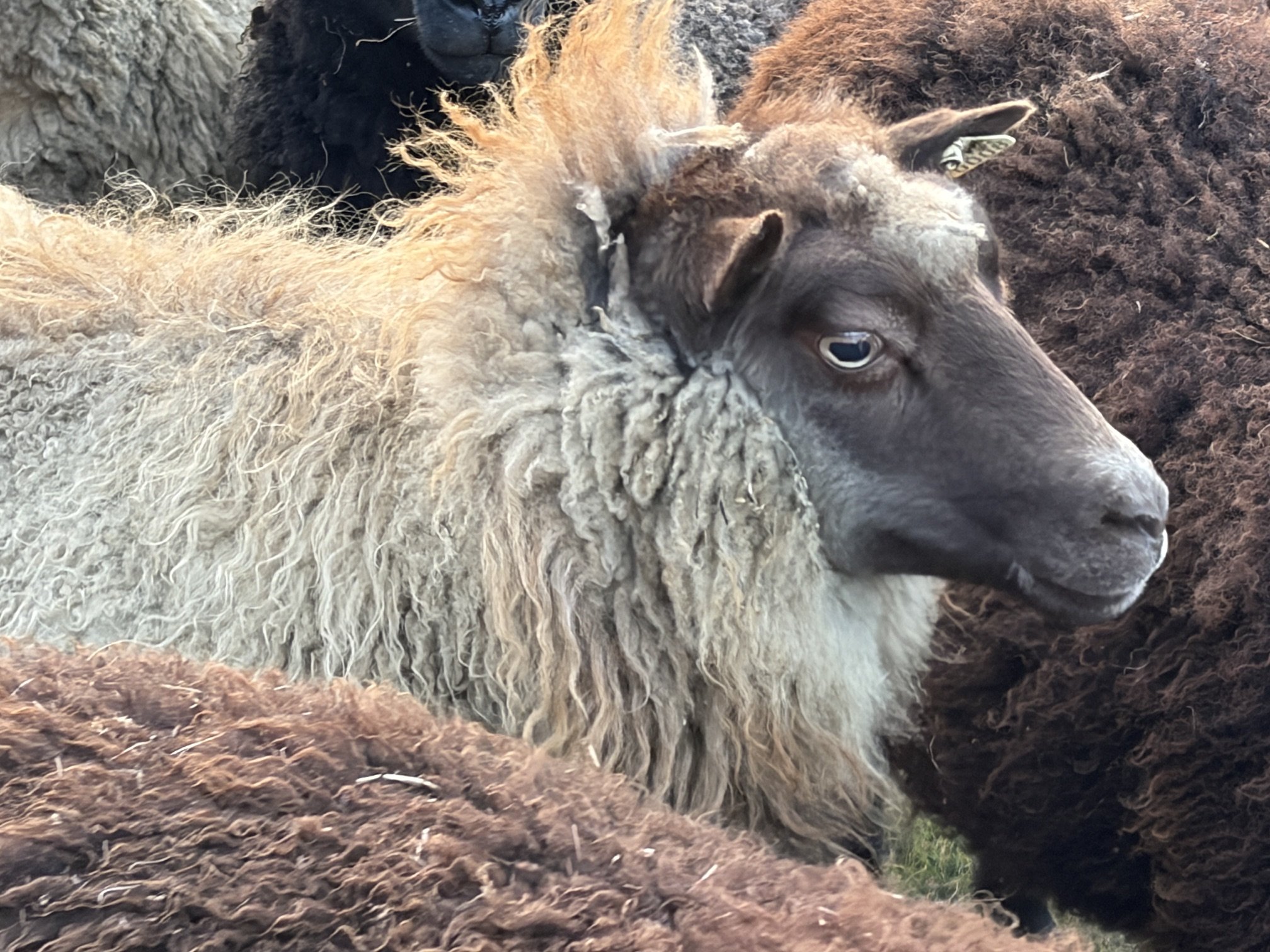
The average sheep produces 7.2 pounds of wool a year although anywhere between 2 and 30 pounds is normal. (5)
Wool often gets thrown into bags and tossed in a corner as an afterthought in the shearing process. Before they know it, ranchers can develop a whole barn full of wool. Some people burn the wool, bury the wool as a heap, or even throw it away in a landfill. But this wool is still useful! Wool as a protein fiber contains a high level of nitrogen, ranging between 9-12% (2) (3). Nitrogen is the main constituent of conventional fertilizer and is required for plants to grow. Wool’s primary protein structure is keratin, which is a tough fiber that slowly breaks down over time. Because of this the nitrogen in wool is slow-release and will not burn plants. Wool also contains sulphur, potassium, calcium, zinc, and iron (2) of which are all needed for strong plant growth. The research has shown that wool pellets do indeed make a positive difference in plant growth (4).

Why Turn Your Waste Wool into Pellets?
For centuries, shepherds have used wool in their garden, especially on the top of the soil as a mulch. However, turning wool fleeces into pellets makes the whole process more convenient, more time efficient, and allows the pellets to be used in the soil as well. The good news is that you don’t have to own pelletizer equipment to be able to turn your wool into fertilizer and soil amending pellets.
Wild Wisdom Wool Pellet Company is proudly Oregon’s first and currently only fiber mill that offers custom wool pelletizer services. Custom milling is the least expensive way to turn your waste wool into garden gold, offering you all the benefits of wool pellets. If you don’t own sheep but are still interested, ask around. Many shepherds will gladly give you their waste wool.
The many benefits of wool pellets include:
Water Conservation: Wool holds roughly a gallon of water per pound, or about 4X its weight. The water is then held in the soil available for reabsorption. This reduces watering anywhere between 25-50%. This reduction in watering can be especially important in container gardens and pots where frequent or even daily watering is often a must without wool pellets.
Slow-Release Nutrients: The tough keratin structure of wool slowly breaks down over the course of a growing season delivering nitrogen, potassium, micronutrients, and microorganisms to your soil over time.
Soil Aeration: Wool pellets are compacted but expand again in soil after water is introduced. As they slowly decompose the wool pellets naturally aerate the soil and leaves room for healthy root growth.
Slug and Snail Deterrent: At the microscopic level, wool is barbed. This is what allows wool to felt easily. Wool also contains lanolin, a natural wax. Slugs and snails are not fond of the texture of wool or the lanolin and wool acts as a natural, chemical free, and pet safe slug and snail detereent.
Our 2026 Custom Milling Rates:
Wild Wisdom Wool Pellet Co. will process your raw, unscoured wool into easy to use pellets. We can process small amounts of wool as well as larger orders.
Sheep Wool $4.00/pound
Alpaca and other fiber require a minimum of 50% added sheep wool for the pelletizing process.
You provide the required additional wool $4.00/pound
Wild Wisdom Wool provides the additional wool $5.00/pound.
If you do not provide your own bag or box for the pellts, separate bagging fees will apply.
How to Prepare Your Wool
Almost all wool is suitable for fertilizer pelletizing, includes belly, leg, and neck wool. However, there are some important guidelines to consider. Check out our easy guide for custom milling.
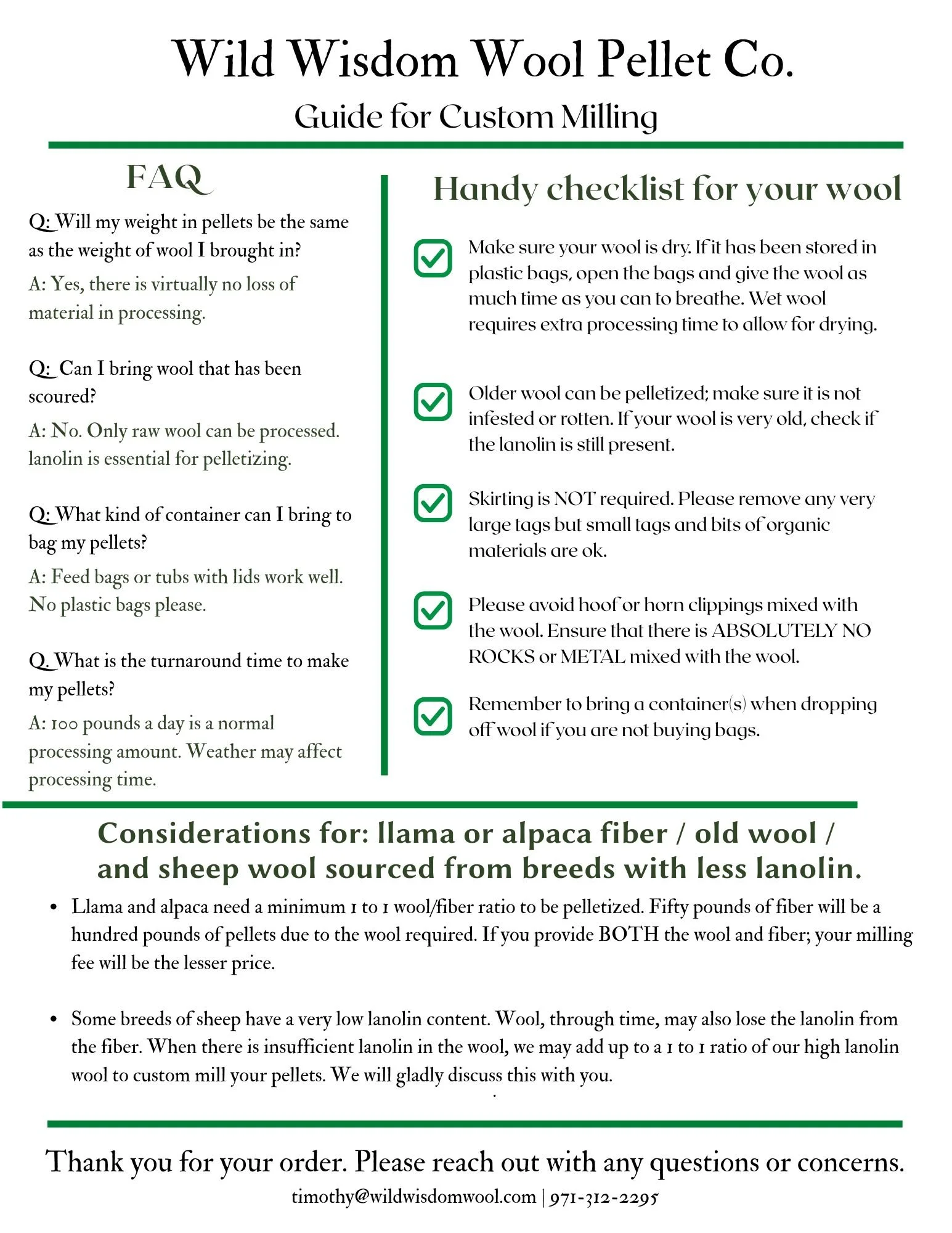
We recommend opening plastic bags a couple of days before delivery to ensure that extra moisture can dissipate. Wet wool requires extra processing time to allow it to be the correct moisture level for pelletizing. Make sure that the wool is not infested or rotten. Skirting is not required but please remove large tags and ensure that there is no garbage or hoof trimmings in the wool.
We accept wool via US Mail as well as in person drop off. Email timothy@wildwisdomwool.com to get on the schedule, or call 971-312-2295
We look forward to working with you!
-Kimberly
References:
(1) Global Wool Prices On Macrotrends: https://www.macrotrends.net/4046/global-wool-prices
(2) Literature Values for the Elemental Composition of Sheep Wool https://www.researchgate.net/figure/Literature-values-for-the-elemental-composition-of-sheep-wool-all-values-presented-in-mg_tbl3_357457491
(3) The Science of Wool https://wildwisdomwool.com/science-of-wool-pellets
(4) The Research Behind Wild Wisdom Wool for Plants https://wildwisdomwool.com/blog/the-science-behind-wool-pellets
(5) Real Men Wear Wool, Sheep 101 https://www.sheep101.info/wool.html